 |
 |
 |
 |


|
|
|

|
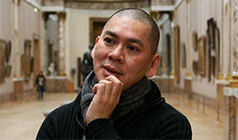
Tsai Ming-liang: The Resonator |
 |
|
When I savour the memory of all Tsai’s films that I have seen and re-seen, studied and taught and written about, I recall the saying of Paul Valéry: “Solitude I name this closed system where all things are alive”. It’s a paradox: a system that is closed but living. Closed: people who are materially impoverished, socially and politically determined, imprisoned by the fact of existence (ageing, sick, dying) and by their own inescapable neuroses. Alive: art that is teeming with possibilities, virtual realities, hidden pleasures (private but shared), insights, sensations. Tsai’s cinema embodies that paradox, and takes it to a new height. On the one hand, there are few œuvres that seem so bleak and hopeless. We stare misery in the face, and we cry just like his characters. A river of tears. On the other hand, Tsai sets cinema free, and he sets us free as spectators. Free to look and feel and explore and reflect. Tsai is the liberator time and space, of event and gesture, in audiovisual media. Even when his films and videos and installations appear to have reached their most bitter, most tragic point, there is still – over and above this content – a constant exhilaration in the way he uses the medium of image and sound, the way he stages environments and bodies. There’s a lot of empty, unpopulated space in Tsai’s work. And a lot of silence. Voids. But never a nothingness. The void is alive. It trembles and sparkles with the memory of what has already passed, and the possibility of what is yet to come. Manny Farber redefined the concept of negative space in arts of the image: painting and cinema. After him, negative space is no longer just the portion left deliberately empty in a canvas or in a camera frame – the absence that offsets what is present, unbalancing the image and throwing it outside of itself. Negative space now becomes “the command of experience which an artist can set resonating within a film”. Tsai, the liberator of time and space, is a resonator. It happens within his shots. The shot as a cell, a nucleus, reaching out to touch every other cell, over and above the simple narrative line. There is sometimes a long pause at the start before action begins, and another long pause after it ends, after the people and the gestures are absented. With a ritual of off-screen sound, such as the tap-tap of shoes, bringing in the person to our attention, and then ushering them out. Every shot traces a trajectory. The filmic frame, perfectly composed by the camera eye, gives us multiple edges, entry & exit points, curves and trajectories. It’s a labyrinth – and a playground. Once a trajectory has played itself out and falls out-of-frame, its elements can go literally anywhere – in our minds. Characters can connect; paths can cross. The skywalk is gone, but there will always be the opening, the birth of another pathway. A virtual pathway. Disconnections occur, too. There are meetings that never happen, that just miss their moment, their mark. It’s inevitable, it’s human. It’s also social: the grids imposed by architecture, the buildings torn down, the parks remodelled. So many solitary bodies, grieving. So many satellites, off their course – or stuck, too stuck, in the same groove. But destinies and directions are not fixed in Tsai. The walker will keep on walking, now in one city or landscape, and now in another. There will always be motion, even if it’s so slow that it’s hardly perceptible. Meanwhile, the world around the walker will be seen anew, askance: in reflections, at unusual angles, in spaces that are mind-bending composites of one thing and another. Tsai’s work sometimes leans more to performance art than narrative cinema. Physical gesture becomes ritual; and any movement resembles a gauntlet. To carry a watermelon. To crawl along the floor like an insect. To sing a song, strike a pose, or do a dance. To bend, to strain muscles, to piss, to wait idly on a bench, to get or to give a massage. It’s all work, all pleasure, all pain. Every exertion pushes atoms of possibility out into the atmosphere. Tsai works with filmed images, but he also uses stages, gallery spaces, virtual 3D environments. Anywhere that a body can move, where it can be displaced and transformed. The body is an element in Tsai. It stands (or falls) on par with all the other material, physical elements: concrete, wind, dirt, glass. And, above all else, water. The water flows, it never stops flowing in Tsai. It falls from the sky, it expels from the body, it is corralled in barrels and aquarium boxes and rivers. It’s nature, humanity and politics all in the one element. It can free you, wash you clean, or it can infect you for life. The tears that characters cry are also bodily secretions, reflexes. The water that you and your mattress can float away on, in the loveliest of all dreams, is also a drift unto death. What was it that Marilyn Monroe sang in an Otto Preminger western? Love is a traveller on the river of no return / Swept on forever to be lost in the stormy sea. Like Marilyn, Tsai is a poet.
MORE Tsai: Journey to the West, Stray Dogs, What Time Is It There?, I Don't Want to Sleep Alone, The Hole, The River
© Adrian Martin February 2024 |
