 |
 |
 |
 |


|
|
|

|
Rock'n'Roll Ringo
|
 |
|
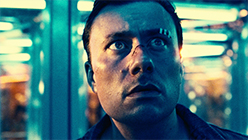
Fairgrounds in cinema are ambivalent things: they promise spectacular fantasy worlds, but are also tacky monuments to crass commercialism. Rock’n’Roll Ringo presents this setting in a way that is reminiscent of the slow-burning, emotionally-charged realism of Tizza Covi & Rainer Frimmel’s films, such as La Pivellina (2009). Ringo (Martin Rohde), a reluctant manual worker at the Cranger Kirmes funfair near the Rhine-Herne Canal, is lured into the boxing ring. In that role, he quickly becomes a star attraction – and, often, a very bruised one. Meanwhile, on the personal plane, Ringo struggles to forge a bond with his young, deaf-mute daughter, Mia (Tuba Seese, authentically cast), in the wake of a broken marriage. Ringo is driven by a dream, and marks his time saving up money and pleasing his bosses. But will this oppressive environment snuff out his true potential? Rohde gives a commanding, sometimes richly comic performance as Ringo – often befuddled and passively led into risky situations by others, but always following the instincts of his generous heart. The tentative relationship between Ringo and another fairground dweller, Jenny (Larissa Sirah Herden), plunges him into the volatile contradictions of a seedy world poised between entertainment and commerce. Writer-director Dominik Galizia (it’s his third feature after Figaros Wölfe [2017] and Heikos Welt [2021]) depicts this near-extinct proletarian milieu with a brittle but alluring 1980s techno vibe. Vivid scenes involving dodgem bumper cars (shades of Bresson’s Mouchette [1967]) remind us how cinematic such a cramped, vulgar location can be. Rock’n’Roll Ringo expertly moves us through a wide range of dramatic moods and atmospheres. © Adrian Martin 27 November 2024 |


